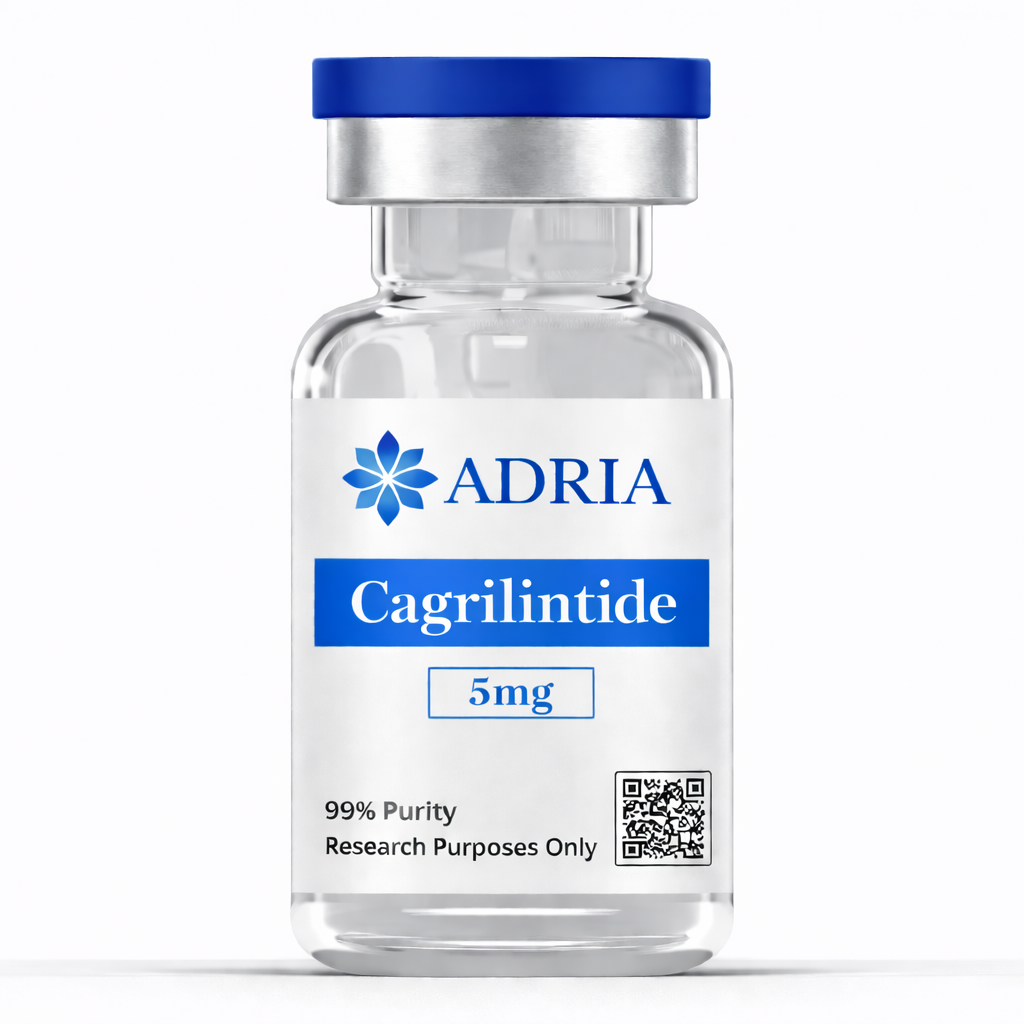
10 in stock
Adria Peptides
Cagrilintide
Cagrilintide
Couldn't load pickup availability
Cagrilintide is a synthetic, long-acting analog of the hormone amylin, originally developed by Novo Nordisk and currently investigated in clinical research for metabolic regulation and weight management. Amylin is naturally co-secreted with insulin by pancreatic β-cells and plays an important physiological role in regulating appetite, slowing gastric emptying, and maintaining glucose balance.
Cagrilintide has been structurally engineered to improve stability and extend its duration of action compared to natural amylin, enabling prolonged biological activity in research settings. The peptide interacts primarily with amylin and calcitonin receptors, mechanisms that have been studied for their role in satiety signaling, appetite regulation, and metabolic control.
Current clinical research has explored Cagrilintide both as a standalone compound and in combination with GLP-1 receptor agonists, where studies have demonstrated notable effects on body weight and metabolic parameters in controlled trials.
Each vial contains research-grade lyophilized peptide with ≥99% purity.
Lyophilized peptides are supplied in sealed glass vials and can be shipped using standard delivery methods without refrigeration. Short-term temperature fluctuations during transit do not compromise their quality or stability. Even during warmer conditions, including summer shipping, lyophilized peptides typically remain stable for several weeks.
Upon receipt, lyophilized peptides should be stored at 4°C or below and protected from direct light. Although they may remain stable at room temperature for several weeks, long-term storage is best at -20°C or colder. Exposure to moisture can significantly reduce stability over time. Before opening a vial removed from cold storage, allow it to reach room temperature first to minimize moisture condensation from the surrounding air.
Peptide solutions have a more limited shelf life than lyophilized peptides. To extend stability, it is recommended to prepare small aliquots and store them frozen. In general, peptide solutions are considered stable for 3 or more weeks at +4°C and approximately 3–4 months at -20°C. Repeated freeze-thaw cycles should be avoided, as they may lead to peptide degradation.
This product is supplied strictly for research and development use only and is not intended for human or animal consumption, therapeutic use, medical use, cosmetic use, or food-related applications.
Suitable for in-vitro laboratory research, including receptor-ligand binding studies, enzyme assays, cell-based assays, signaling studies, epitope mapping, and related scientific applications.